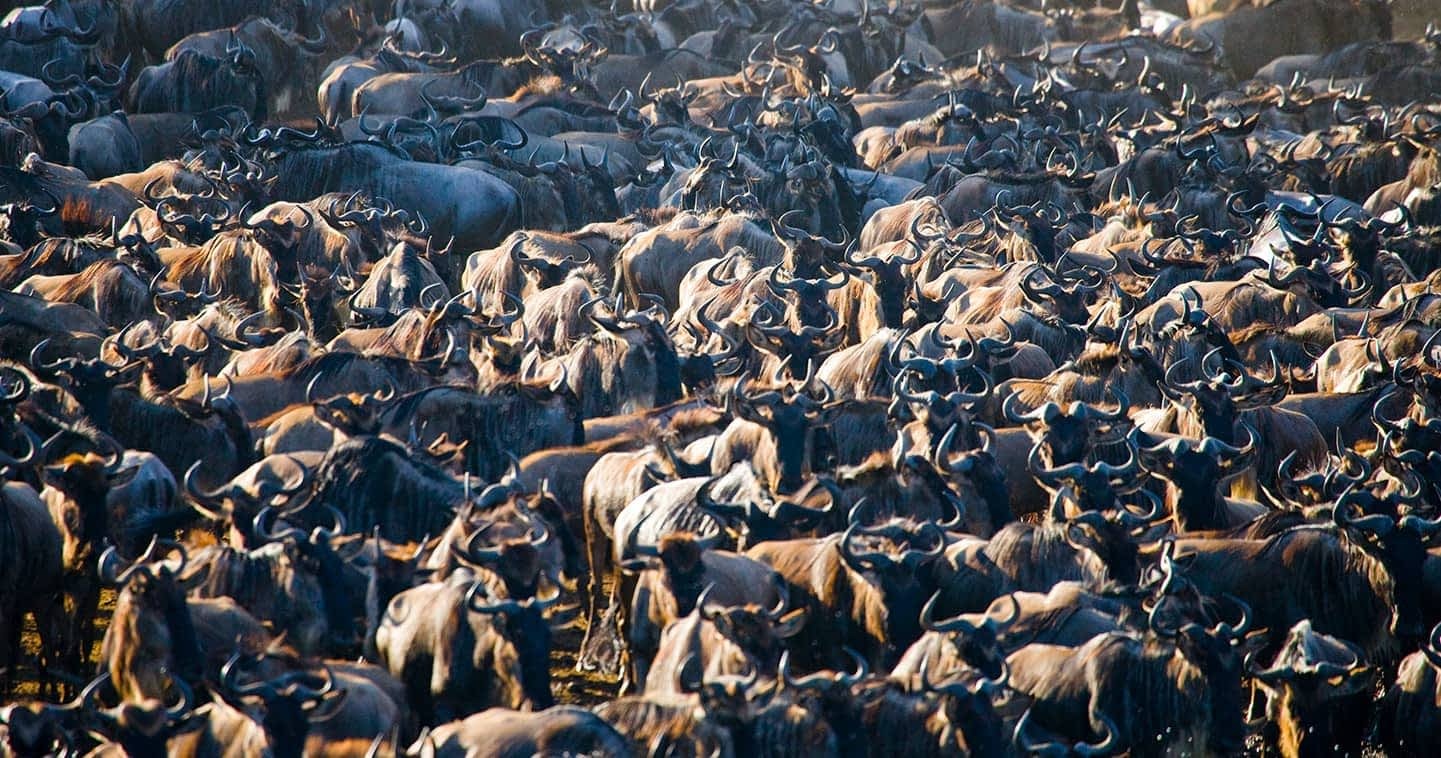
The Serengeti you visit in February is not the Serengeti you visit in August. One trip might take you to newborn wildebeest on the southern plains; another to herds gathering near the Mara River. The question is not just when to go, but where to stay when you get there.
When Is the Best Time to Visit the Serengeti?
June to October is a good starting point for a first Serengeti safari. Conditions are generally drier, vegetation is thinner and wildlife can be easier to spot. If calving is what draws you here, look at January to March in the southern ecosystem around Ndutu. For a chance of Mara River crossings, consider roughly July to October in the north.
There is no month that delivers every experience in the same place. The herds follow rain and fresh grazing, not a fixed timetable. Choose your dates around the experience you most want, then choose your camp around the region. Leave room for the resident wildlife too: a lion resting beside the track does not need a migration calendar.
January to March: Southern Plains and Calving
After rain brings fresh grass to the southern plains, large herds gather to feed and give birth. Calving is often concentrated around February, though the timing varies. For travellers interested in young animals and predator behaviour, this is a particularly rewarding window. Wide, open grasslands also make it easier to appreciate just how far the herds stretch.
Look closely at the camp location before booking. Ndutu lies partly within the Ngorongoro Conservation Area, and a central Serengeti lodge may be a long way from the calving grounds. If calves are your priority, ask for a route with time in the southern plains rather than assuming any itinerary labelled Serengeti will take you there.
April to June: A Greener, Quieter Safari
April and May usually bring the long rains, greener plains and good birdwatching. Some camps lower their rates, making this worth considering if your dates are flexible. The trade-off is practical: muddy tracks, slower transfers and occasional seasonal closures. Ask which camps will be open and how your route works in wet conditions.
June often brings a shift towards drier weather. The migration may be in the western corridor or moving north, with the Grumeti area a possible focus. Before settling on a western camp, check recent herd movements with your operator. An attractive calendar diagram is useful for planning, but current conditions should guide the finer details.
July to October: Northern Serengeti and River-Crossing Season
If river crossings are your main ambition, northern camps near the Mara River are the places to consider. Patience is part of the experience. Herds can gather on a bank for hours, move away, or cross when you least expect it. Some cross back again. You may see a crossing during your stay, but no honest itinerary can promise one.
Give the north several nights if you can. A single overnight stop leaves little time to wait, explore or change plans. Popular camps fill early, so check availability alongside flight connections. Central Serengeti is still rewarding for resident predators, but it is not a sensible base for daily trips to northern crossing points.
November and December: Short Rains and Flexible Planning
The short rains often refresh the plains as the herds begin moving south. This can be a lovely time for green landscapes, though the migration's location is less predictable than a neat month-by-month chart suggests. Christmas and New Year can still be busy, so quieter-season travel does not automatically mean quiet holiday dates.
A mix of likely migration areas and central Serengeti wildlife gives the trip more balance. Resident lions, leopards and other animals are a reason to visit in their own right. Pack for cool dawns, strong afternoon sun and a passing shower, whichever month you choose.
Choose the Camp Before the View From Its Deck
A beautiful camp is only part of a good Serengeti safari. Its location needs to suit your dates, especially if you are travelling for calving or the migration. Our Serengeti guide explains the destination, while the Ngorongoro and Serengeti itinerary gives you a route to discuss and adapt rather than a one-size-fits-all seasonal plan.
Three or four Serengeti nights give you time to settle into the rhythm of game drives instead of spending most of the visit arriving and leaving. With longer stays, consider central wildlife viewing alongside the seasonal migration area. Send us your month and the experience you most want to see; we can help you choose where those nights will count.
Insider TipChoose camp location before choosing camp luxury. The most comfortable lodge will not compensate for being hours away from the wildlife experience you travelled to see.
Ready to Make It Real?
Our travel specialists will design a tailor-made itinerary around your exact dates and interests, at no obligation.
Get a Free Quote